
There is something incredibly simple yet extraordinary about touching clay. Before it becomes a qvevri, a jug, or a bowl, it is simply earth — soft, alive, and full of endless possibilities.
Working with clay is more than just a creative activity. It is a way of reconnecting with ancient Georgian traditions, with something deeper — something that existed long before us and will likely continue long after we are gone.
When you hold clay in your hands, time seems to slow down. You are no longer entirely absorbed in the present. Instead, you become connected to the past, to the people who, centuries ago, made the very same movements, worked with the same material, and found the same sense of peace in the process.
Georgian Ceramics: A Tradition That Has Survived for Centuries
Georgian ceramics are much more than decorative objects or everyday tableware. They represent a centuries-old craft that has preserved its authenticity and cultural significance to this day.
In ancient times, people used clay to create almost everything they needed — everyday dishes, kitchen utensils, and large vessels for storing wine.
The qvevri, for example, is far more than a simple clay vessel. It is one of the most important symbols of Georgian winemaking culture, deeply connected to the country's traditions of wine production and hospitality.
What makes this tradition particularly fascinating is how little its fundamental principles have changed over time.
Even today, the essential combination remains the same: hands + clay + water + fire.
Shapes and designs may have evolved, and techniques may have become more refined, but the essence remains unchanged: a person and the earth come together to create something new.
When you work with clay, you become part of a tradition deeply rooted in Georgian culture. It is no longer simply a hobby — it becomes a way of experiencing and connecting with cultural heritage.
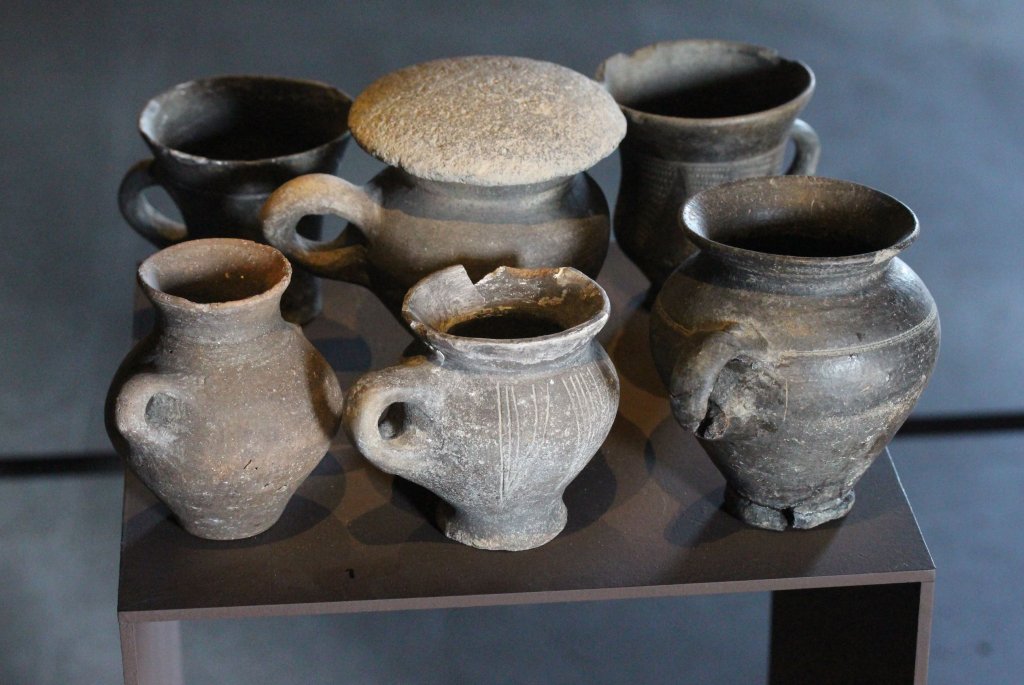
Connection to the Earth That Never Fades
Modern life moves incredibly fast. Screens, notifications, constant activity, and endless distractions fill our days. We often live on autopilot, rarely stopping to truly experience the world around us.
And this is where Georgian pottery invites us to slow down.
You cannot rush the process. You cannot control everything. You have to feel the material and work with it.
The texture of the clay, its moisture, the way it responds to your touch — all of these sensations bring you back to something wonderfully natural and tangible.
They remind you that you are part of nature, not just the technological world we have created.
There is something deeply calming about watching your own hands gradually shape a piece of clay.
It almost feels like a conversation between you and the material. You guide it, but you can never control it completely.
And surprisingly, letting go of that control can be incredibly liberating.
Craft That Tells Stories
One of the most remarkable qualities of Georgian ceramics is the way they bring together tradition and cultural identity.
Every shape, ornament, and design has something to say.
Sometimes it reflects the influence of a particular region. Other times, it reveals the distinctive style of an individual craftsperson or a family whose pottery-making techniques have been passed down for generations.
Across Georgia, ceramic traditions can differ significantly in their forms, decorative details, and production techniques.
This regional diversity is precisely what makes Georgian pottery so fascinating.
Pottery is not simply about creating objects. It is about preserving knowledge and passing it from one generation to the next — often without words, through observation, repetition, and practice.
When you decide to take part in this process, you become part of that story too.
The object you create becomes another link in a continuous chain of craftsmanship, tradition, and human creativity.
The Beauty of Imperfection
Working with ceramics teaches us one particularly valuable lesson: perfection is not always the goal.
Clay does not always behave the way we expect it to. A piece may turn out completely differently from what you originally imagined. It might crack during the creative process, its shape may lean slightly to one side, or its surface may not be as smooth as you intended. Yet these little imperfections are exactly what make each handmade piece unique.
Every object carries its own story and character. You can see the movements of the maker's hands, the decisions made along the way, and sometimes even the mistakes that became part of the final design. And there is beauty in all of it — not in perfection, but in authenticity. Perhaps this is one of the most meaningful lessons pottery can teach us: sometimes, true beauty lies in imperfection.
Growing Interest in Georgian Ceramics
In recent years, interest in Georgian ceramics has been growing, both within Georgia and internationally. People are increasingly appreciating handmade objects. They are looking for authenticity, meaningful stories, and products that carry a sense of identity. In a world dominated by mass production, unique, handcrafted pieces are becoming more valuable.
Georgian ceramics bring all these qualities together. They represent an ancient tradition that remains remarkably relevant in the modern world. Today, many young artists and craftspeople are rediscovering pottery, combining traditional techniques with contemporary designs. They create something new while remaining connected to their cultural roots. This evolution reminds us that pottery is not simply a relic of the past. It is a living, constantly developing craft that continues to inspire new generations.
Georgian Ceramics in Modern Life
Today, Georgian ceramics are becoming an increasingly familiar part of everyday life, appearing in cafés, homes, restaurants, and workspaces. A handmade cup for your morning coffee or a clay bowl for your evening meal is no longer just a functional object. It becomes part of the experience. Many people consciously choose handmade products because they offer a sense of warmth, character, and individuality that mass-produced objects rarely capture. Georgian ceramics are especially meaningful in this respect. Every handmade piece carries not only the personal touch of its creator but also a part of the culture and traditions from which it originates.
It is in these small details — the shape, the texture, the slightly uneven surface — that an emotional connection begins to form. And that connection is what transforms an ordinary object into something special.
Perhaps this is why working with clay can be so captivating. It reconnects us with the earth, brings us back to the physical world, and reminds us that creating something beautiful does not have to be rushed. We can slow down, enjoy the process, and appreciate the experience itself. Pottery teaches us patience. It teaches us to embrace uncertainty and accept the creative process as it unfolds. Most importantly, it reminds us that something does not have to be perfect to be valuable. Georgian ceramics give these lessons an even deeper meaning because behind every piece lies a unique cultural heritage, centuries of tradition, and a rich history.
And perhaps the next time you hold a ceramic object in your hands — whether it is a cup, a bowl, or a simple clay vessel — you will see it a little differently. Not merely as an object, but as a story that has traveled through generations to reach you.